


Weighted Vests for Running, Strength and Endurance - The Benefits and Practical Advice
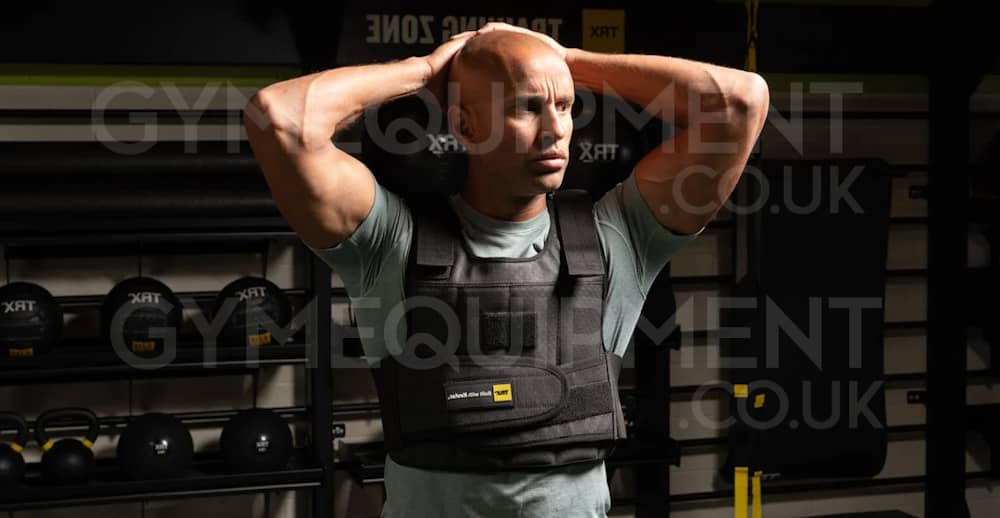
Want to make your walks more challenging or take your bodyweight workouts up a level? A weighted vest offers a simple way to add resistance while keeping your hands free.
The idea is pretty straightforward: carry a little extra weight and your body then has more work to do. Match the vest load to your activity and your goals and you can then get the most from it.
From press-ups or step-ups through to walking and running, here’s what a weight vest can bring to your training and what the scientific research tells us about the benefits.
In this article
- A quick look at the history
- What is a weighted vest?
- What benefits can you expect?
- Weighted vests for strength training
- Weighted vests for walking and endurance
- Should you run with a weighted vest?
- Strength training and running performance
- Calories and bone health
- How much weight should you use?
- Getting started
- Safety and suitability
- Choosing a weighted vest
- References
A quick look at the history
Weighted vests may be enjoying a surge in popularity, but training with extra weight is nothing new.
In De Re Militari, written in the late fourth or early fifth century, the Roman writer Vegetius described recruits practising marches while carrying loads and becoming accustomed to wearing armour. They weren’t using fitness vests, but the principle was familiar: practise carrying weight to prepare for demanding physical tasks.[1],[2]
Modern weighted-vest research also goes back decades. In 1987, researchers studied endurance athletes using vests weighing around 9–10% of their body weight over four weeks. Some endurance measures improved, but other results were less favourable.[3]
The concept has a long history. The useful question today is how it fits into your own training.

What is a weighted vest?
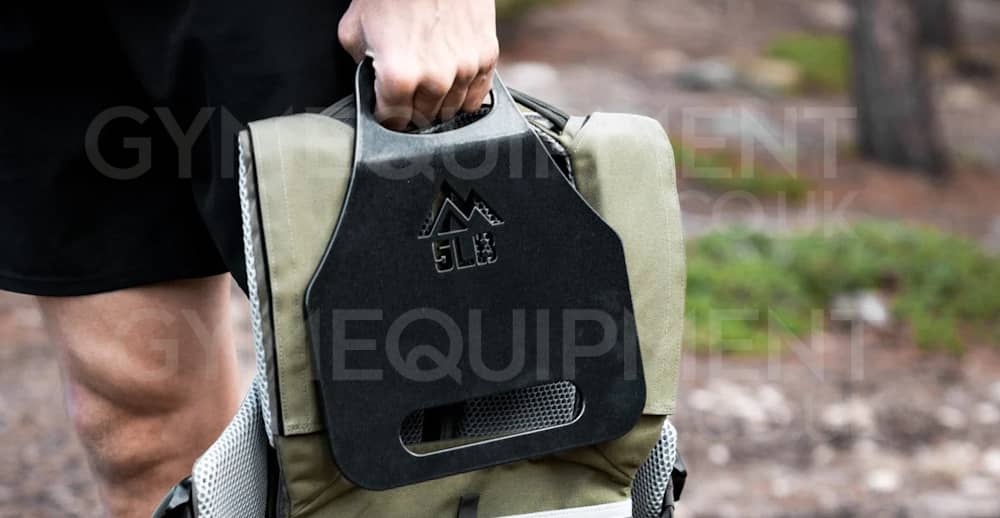
A weighted vest is worn over your shoulders and around your torso. Depending on the design and type, it will contain built-in weights, removable blocks or weight plates.
Adjustable models allow you to change those weights to suit, whilst the shoulder and waist adjustments help to keep the vest secure as you move. Your hands remain free, which makes it a very convenient option for walking and selected bodyweight exercises.
Adding weight will increase the load your body has to support and then move. Walking research shows that this can increase oxygen use and exercise intensity, although the effect depends on the weight and walking speed.[4]
In practice, a weights vest can make a familiar activity more demanding, without requiring you to move faster.
What benefits can you expect?
A weighted vest has three useful roles:
- Adding resistance to bodyweight exercises (for when your usual sets start to feel easy)
- Increasing the challenge of walking (another option alongside introducing pace, distance or incline)
- Adding variety to your routine (if you enjoy trying a different training approach?!?)
Results will depend on how you use the vest as weighted press-ups, a loaded walk and a 'weighted' run will all place different demands on your body.
It also helps to separate a harder workout from a better training result. What we mean here is that extra weight can increase the effort required during a session, but that alone doesn’t prove it will improve your race times, build substantial strength or increase bone density necessarily.
For strength training
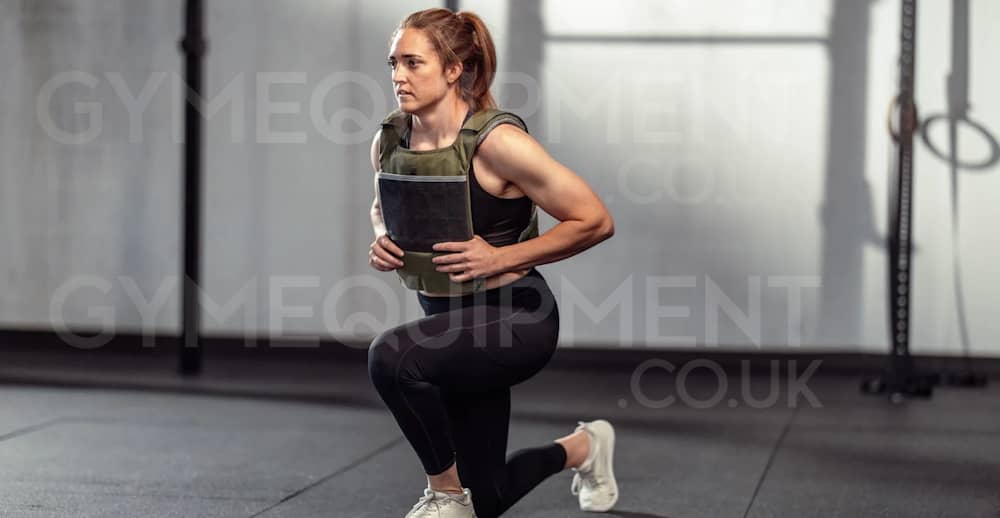
If you can comfortably complete your usual bodyweight exercises, a vest can provide a 'next step' in difficulty.
Exercises that may suit a weighted vest include:
- Press-ups
- Pull-ups
- Split squats and lunges
- Step-ups
- Squats
The advantage is convenience: you can add resistance without holding dumbbells or changing your grip.
Think of the vest as a tool that gives you progressive overload, gradually increasing the challenge as you get stronger. Start with an exercise you already perform well, then add a manageable amount of weight.
Simply wearing a vest is unlikely to produce meaningful strength gains on its own. Benefits will come from combining the resistance with appropriate exercise and of course progression.[9]
The American College of Sports Medicine’s 2026 guidance emphasises training all major muscle groups at least twice a week. It also recognises bodyweight exercises, bands and home workouts as effective training options.[5]
A vest can help progress parts of that programme. Choose a load that lets you complete controlled repetitions, and take enough rest to maintain your technique.
Weighted vests for walking and endurance
Make your walks more challenging
If you already walk regularly, a light weighted vest will give you a way to increase the effort.
In a small treadmill study, weighted vests increased the demands of walking with benefits depending on the speed and load involved.[4] A weighted vest will make the walk more difficult, but it won't tell you how your fitness will improve over time.
Alternatives for upping the ante with your walk, that are more widely used, include changing your pace, route or adding in an incline. A weights vest is simply another option you can choose from, depending on what you enjoy and can comfortably manage.
Know which type of endurance you’re training
“Endurance” can mean different things.
Cardiovascular endurance is your ability to sustain activities such as walking or running. Muscular endurance is the ability of particular muscles to keep repeating or holding an effort for longer.
A weighted walk and a set of weighted press-ups therefore have different purposes. Choose your activity first, then use the vest to add an appropriate challenge to build up your ability to keep doing that challenge.
Should you run with a weighted vest?
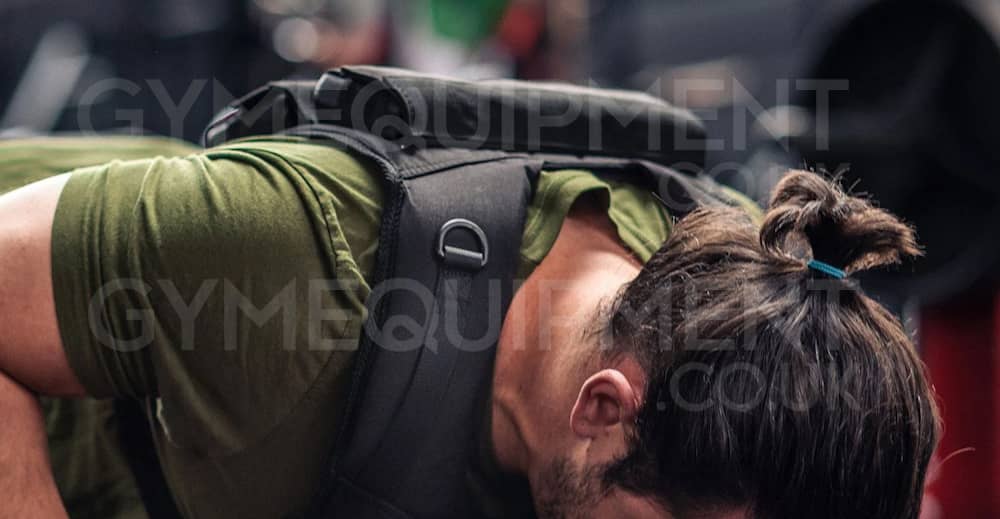
Running with a vest means your body must move extra weight with every stride you take. This increases the challenge, but in doing so this can also change your running mechanics.
Research involving trail runners found that heavier vest loads actually altered key measures such as ground contact time - which is the time each foot spends on the ground.[6]
These changes don’t automatically mean better technique or lower injury risk. In fact this change in gait can cause many more problems. They are a reason to introduce weight carefully.
Will a vest make you faster?
The evidence is, as you can imagine, utterly mixed.
Early research reported some improvements in some endurance measures, but this involved small groups and training routines that differed considerably from an occasional weighted run. [3]
A 2024 review found that vests generally slowed down sprinting times while worn (as would be expected as there is more weight to move). Longer-term evidence did not show a significant improvement in sprint times from vest training when removed and the authors highlighted limitations in the available studies. So more to be done in this area! [7]
Sprint results also can’t tell us exactly what to expect over a 5km, half-marathon or marathon. There wasn’t enough evidence here to lead us to believe that weighted-vest running will make you faster.
For recreational runners, maybe it is best treated as an optional addition to your programme that may, or may not, help your overall running fitness when performing consistent running, recovery and strength work. Whatever the actual outcome, you will definitely sweat a lot more!
When might loaded running be useful?
If your event requires you to carry water or any mandatory kit (think Ultras), practising with a load may help you become more accustomed to having extra bulk and extra weight. This follows the practical route of the training mimicking the demands of the event; it isn’t proof of a performance benefit though.
Your actual race pack may be a better choice because it reproduces where and how you carry the weight.
If you want to try vest running, we suggest something like the progression below:
- Establish a comfortable running routine without a vest
- Introduce the vest for walking first
- Then introduce brief, easy running to check load feels comfortable and your movement stays controlled
- Finally, introduce slight longer and longer runs but be very aware of your running style and the comfort of the vest
We always suggest keeping the first few attempts well away from long or hard intervals or trails.
These are practical starting suggestions, rather than a research-tested training schedule.
Strength training and running performance
So if improving running performance is your main goal, then completely structured strength training deserves a huge amount of attention.
A 2024 research review found that heavy strength training, plyometric training and combinations of strength methods may improve running economy in middle and long distance runners.[8] Referring to running economy is all about how much energy you use to maintain a specific pace (of your choosing).
A fitness vest can contribute to this strength through exercises such as split squats and step-ups, provided it offers suitable resistance. Some goals will require other equipment or a more specific programme.
Loaded jumps are a more advanced option. Build competence with unweighted movements and seek appropriate coaching before adding resistance.
Calories and bone health
Does a weighted vest burn more calories?
Weighted walking can definitely increase energy expenditure, because moving extra loads (the vest) requires more effort.[4]
The size of that increase will vary based on a number of factors, not least body weight, vest load, exercise pace and then session length. There is no fixed calorie-burning boost that applies to every/any workout.
Working out with a vest doesn’t guarantee weight loss. That depends on your overall energy balance and habits over time.
Does a vest improve bone density?
Adding a vest and therefore more load during exercise and improving your bone density are two entirely different objectives. Performing one doesn’t automatically equate to establish the other.
In a 2025 trial involving 150 older adults living with obesity, prolonged daily vest wear alongside a weight-loss programme did not significantly prevent hip bone loss compared with weight loss alone.[10]
However, this result can only apply to the people in the study and the programme that was studied. It doesn’t settle every question about weighted exercise, but it does mean a vest shouldn’t be presented as a guaranteed way to protect bones or treat osteoporosis.
How much weight should you use?
There is no single load that will suit everyone. Your personal and existing fitness, activity, injury history, age and vest fit will all matter.
The Cleveland Clinic guidance talks about loads of 5–10% of body weight.[9] Treat this as general guidance, rather than a target you must reach or as a guarantee of safety. A lighter load may be more suitable when you’re getting started.
For example, 5% of a 70kg person’s body weight is 3.5kg. Remember to count the vest itself as part of the total load.
A vest advertised as “10kg” or “30kg” isn’t telling you how much you should use on day one. Check how much weight you can remove and how small the adjustments can be. Look for an "adjustable weight vest".
Choose the weight for the activity. A load that suits controlled strength exercises may be too much for walking or running.
Getting started
For someone already comfortable with their chosen activity, keep the first sessions simple:
- Check the fit. The vest should stay secure without restricting breathing or movement.
- Start lightly. Try a short walk or a few controlled sets of a familiar exercise.
- Check your response. Notice how you feel during the session, afterwards and at your next workout.
- Change one thing at a time. Increase weight, duration or exercise difficulty separately.
- Leave room for recovery. Keep some sessions easy instead of adding weight to every workout.
You can continue using a vest for walking and strength exercises for as long as they serve your goals. Running and heavier loads are optional progressions.
Safety and suitability
Look for a secure fit, breathable material and a load you can control.
Cleveland Clinic recommends speaking to your physician before trying a vest if you have previous injuries. It also advises caution with activities that require extra balance, particularly when you’re new to wearing one.[9]
If you have a condition affecting your heart, lungs, bones, spine or balance, get individual clinical advice before adding weight.
Reduce or remove the load if it causes pain, restricts breathing or noticeably changes how you move. Stop exercising and seek appropriate medical help for chest pain, fainting or severe unexpected breathlessness.
Choosing your weighted vest
The best vest for your training is one that fits securely and is adjustable, and one that offers the resistance you will need now and potentially in the future.
Before buying we suggest you check:
- Minimum load - light enough for your first sessions? Weight of vest with no vest?
- Adjustment increments - Can you increase weight gradually?
- Fit and comfort - Does it stay in place without rubbing or restricting movement?
- Total weight - Are stated figures for the weights alone or the complete vest?
- What’s included - Are weights supplied or sold separately?
Options in the GymEquipment.co.uk weighted-vest range include:
- Key features: Available in 10, 15, 20 and 30 kg versions, with removable solid-metal weights.
What to check: Minimum wearable load and weight-adjustment increments.
REP Fitness Strata Weight Vest
- Key features: Padded interior, adjustable shoulder straps and waist, and an internal plate-retention system.
What to check: Plate configuration, total worn weight and complete cost; the listing states that plates are sold separately.
A weighted vest can be a useful addition when you have a clear purpose for it: making familiar bodyweight exercises harder or adding challenge to your walks. Start with a comfortable load, build gradually and judge its value by how well it supports your training, technique and recovery.
** Please note - product details were checked on 11 October 2026. Confirm the current specifications and included weights before ordering.
References
- Vegetius. De Re Militari, Book I, chapters 19–20. English translation reproduced by Roman Britain.
- Lester G, editor. The Earliest English Translation of Vegetius’ De Re Militari. 1988. University of St Andrews edition description.
- Rusko H, Bosco CC. Metabolic response of endurance athletes to training with added load. European Journal of Applied Physiology and Occupational Physiology. 1987;56(4):412–418. PubMed.
- Puthoff ML, Darter BJ, Nielsen DH, Yack HJ. The effect of weighted vest walking on metabolic responses and ground reaction forces. Medicine & Science in Sports & Exercise. 2006;38(4):746–752. PubMed.
- Currier BS, D’Souza AC, Fiatarone Singh MA, et al. Resistance Training Prescription for Muscle Function, Hypertrophy, and Physical Performance in Healthy Adults: An Overview of Reviews. Medicine & Science in Sports & Exercise. 2026;58(4):851–872. ACSM’s explanation of its recommendations.
- Cartón-Llorente A, et al. Training Specificity in Trail Running: A Single-Arm Trial on the Influence of Weighted Vest on Power and Kinematics in Trained Trail Runners. Sensors. 2023;23(14):6411. Full text.
- Bertochi GFA, et al. The use of wearable resistance and weighted vest for sprint performance and kinematics: a systematic review and meta-analysis. Scientific Reports. 2024;14:5453. Full text.
- Llanos-Lagos C, et al. Effect of Strength Training Programs in Middle- and Long-Distance Runners’ Economy at Different Running Speeds: A Systematic Review with Meta-analysis. Sports Medicine. 2024;54(4):895–932. PubMed.
- Cleveland Clinic. The Do’s and Don’ts of Wearing Weighted Vests. 27 April 2026. Read the guidance.
- Beavers KM, et al. Weighted Vest Use or Resistance Exercise to Offset Weight Loss–Associated Bone Loss in Older Adults: A Randomized Clinical Trial. JAMA Network Open. 2025;8(6):e2516772. Full text.
This article provides general fitness information and is not an individual medical or rehabilitation prescription.